Showing posts with label dance. Show all posts

4/18/2017

How Stretched Is a Stretch Too Far?

A not-so-recent trend in both sports and dance, as well as in various recreational activities, such as yoga, is the desire to demonstrate hyper-flexibility moves and to work on pushing the limits in that area.

While many yoga practitioners have already shared that the point of yoga is not to twist yourself in a pretzel, if you look at the various commercial representations of yoga, whether in advertisements for studios, clothing or accessories, the overstretched person has become yoga's poster child.

In many types of dance, from classical ballet to much more modern types of dance, increased flexibility moves have also taken a prime spot on stage, while, in reality, different dances use a different vocabulary of expression, and the physical qualities of a dance that matter much more than flexibility are features such as coordination, core strength, balance, control, musicality and expressiveness.

But in rhythmic gymnastics, it is much worse than in yoga or dance. It is worse because professional gymnasts actually get scored on their moves and their rankings depend on demonstrating flexibility constantly. For kids who aspire to reach professional level, the demand to be extremely flexible begins very early on, as early as ages 3 and 4. While there are many people in the world who have natural flexibility, for most, pushing the limits of stretching can work wonders as well. Regular stretching can lead many to accomplish a position like this:


If you start young enough and in good health, with high-quality coaching and persistence, you will likely get to an over-split. In fact, many gymnasts who never reach professional competitive level have an over-split on both sides. Even as an adult, through a combination of static and dynamic stretches, one can become quite flexible, if that is a personal goal. 

But the question is: if you are not an aspiring circus artist, what would this much stretching contribute to your life, or even your career in dance/sports? The answer is: probably not much. Our bodies are miraculous and it is natural to aspire to make the best use of them. But the reality is that, at some point (and that point is very different for each person), over-stretching can pose a threat to joints and bones when they are held by very loose ligaments. Holding static stretched positions, like the one on the picture, is also not for everyone, because of the prolonged exertion of pressure on the joints.

To be fair to dancers, many classically trained and modern dancers, have various other strengths to show besides extreme flexibility. For aspiring and professional gymnasts, where the code of points also provides points for other moves, such as jumps and pivots, many gymnasts can show amazing routines without twisting themselves into seemingly impossible shapes.

Circus artists, on the other hand, also start their training very young and under very specific and professional supervision. But the skills and abilities required for acrobats, for example, are not the same as those who perform tricks focused mostly on flexibility. You would need a combination of strength, great balance and trained muscle memory, and very specific technique. Doing a over-split may make your act more beautiful, but not spectacular by itself.

In the late 1990s and in the early 21st centuries, decisions around the gymnastics Code of Points gave strong preference to extremely flexible gymnasts. In fact some of the moves that were performed then are no longer part of gymnastics routines because of the very high risk of injury they bring, even for professionals.

While success requires many sacrifices, injury should never be one of them. Like stepping on the balance beam, a great routine requires  a careful judgement about risk. And, much like in real life, every time you look for that precise alignment, it all comes to down to one thing: who you are and what you can do best.

10/19/2013

Fall Butterfly Dance


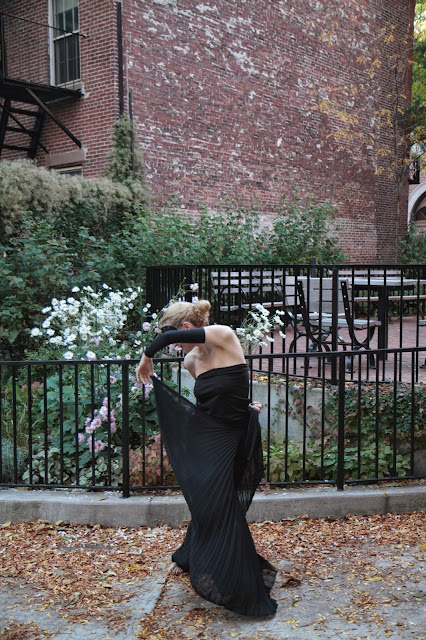
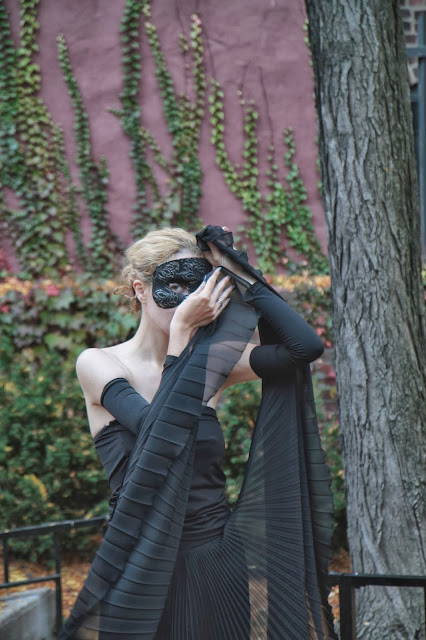
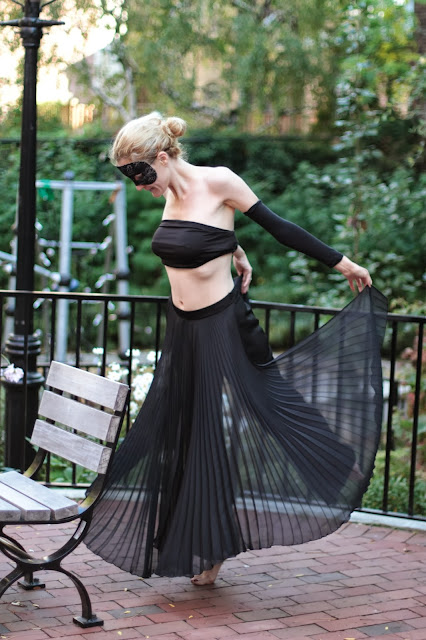
In this series of pictures, I tried to capture my pre-Halloween mood and moves, and an inspiration drawn from gymnastics, ballet and dance.

I dedicate this not just to all crazy fans, but to the even crazier people who live with them, listen to them, bear with them, support them and love them. 


9/27/2013

Katrin Taseva's Dancing Clubs

I really like this new girl on the Bulgarian team who shows lots of flexibility and lots of personality, too. Born in Plovdiv, Katrin Taseva trains in Sofia alongside another young star, Neviana Vladinova.

I think Katrin's best routine this season are definitely her clubs. I was looking for a video from this month's "Margarita Rangelova" tournament but could only find videos of Neviana from that event, so here is a recording from much earlier this year. We can see a lot of potential with her pivots, some great risks and great musicality/dancing. I like the sparkling red colors, the expression on her face and how musical accents are worked into the routine.


HUGE THANKS to Dimo Dimov for these great photographs that help me "live" the routines with this talented gymnast!


5/07/2013

Letter from a Mom : Why I Choose Rhythmic Gymnastics for My Daughters

By Lidia Rozdilsky


I am Sophia's mama, the one that introduced her to the world of exquisite human motion.


Growing up in Eastern Europe "on the other side of the iron curtain," it was a token of nationalism to be proud of our athletes, particularly our gymnasts whom we believed to be unsurpassable. Back then, from an early age on, there was hardly any child of any gender who was not introduced to dancing or music.Years passed and both the country's and the people's priorities and likes changed but the love for the amalgamation of dance and sport in the form of rhythmic gymnastics stayed with me, probably because I left Bulgaria as a teenager and "it" remained part of me in the same token as the "old" Bulgaria still inhabits my memories.

Work, life, and a passion for interacting with different cultures took our family to many countries where on numerous occasions ballet and gymnastics miraculously crossed our path. For instance, in 2008, our family was in the middle of visiting Tokyo when I found out that the Aeon Cup was taking place. Sophia in a sling, I cancelled all plans for the day so baby and I could enjoy seeing Kanaeva, Bessonova, and company in person. I will never forget seeing Vera Efremovna Shtelbaums and throwing myself on her neck virtually screaming how much I loved her, upon which she jumped from joy like a little girl, saying: oй, я такое никак не ожидала... meaning: oh my goodness, I never expected anything like that. Yes, the woman who trained Olympic and World champions never expected that a complete stranger and a nobody like me would put her in a pedestal, why: because Shtelbaums knows that in the final analysis it is not the medals that make a champion but her character and she knows it because she lives it!

Being close to gymnastics and dance has seen me through some of the most horrid times of my life. When Sophia was born, I went through excruciating pain to nurse her so the only thing I could do is stare at the beautiful performances on the computer in order to feed my child what my body makes for her sustenance. Before Sophia turned two, I gave birth to our second daughter Alexandra who is following in the "pointe shoes" of her sister and loves ballet and gymnastics as well. Our family experienced a colossal tragedy as we lost our third daughter Asmara nine days after she was born for unknown reason. One day before she left this world, my friend Iva stopped by to give the baby a gift she was inspired to buy: dancing shoes. We buried her ten days later with them next to her so she can dance in heaven, being taught by "the greatest" like dear Oksana Kostina and Julietta Shishmanova who too left this world very young.

One of the common characteristics that all loss moms across cultures, religions, and other artificial divides exhibit is that whatever "ambitions" for our children we may have had prior to our tragedies, we no longer have them. In the world of gymnastic-crazed hyper-moms many of you may have been left with the impression that Sophia's passion may be the result of yet another woman who sees her daughter as the next Kanaeva. So, please understand, I wrote this entry not because my daughter could not speak for herself during her own video interview but because I truly "get" what the Bulgarian gymnast Silviya Miteva means when she says: my goal is to do the best I am capable of on the carpet. I don't care which place I end up occupying in the ranking afterwards.

Sophia is almost six, but she has never attended a formal gymnastics or ballet class. She has never been to daycare or kindergarten either. Our philosophy as parents about teaching the arts to our children in general is "expose them to the best." We have a high quality projector at home which allows our daughters to see huge images of the world's best dancers and athletes doing what they love to do. When Sophia and Allie want to dance, I turn on the video and simply say to them: do what they do... and stand back amazed at the results.


When they want to paint, they are welcome to just about all professional art materials in our studio. Too often, children give up on art not because of lack of creativity or too much technology but because of being exposed to mediocrity.


I believe that disciplines that embody physical activity and grace teach children so much in terms of character development. Through their interaction with coaches, teammates, and the audience, they learn to show respect, express gratitude, and cultivate their individuality whilst meeting high standards which become their own. They learn perseverance through hardships and joy in self-improvement. Engaged in dance and motion, they become instruments of beauty. And this is why whether my daughters do anything with their passion for dance, beauty, and flexibility is immaterial; because in my eyes (and hopefully in their own) they are already champions because in the "real" world it is all about character development, and there, no one gives trophies.


3/09/2013

Thank You, Lala Yusifova!

Today I watched a routine that made me live a story, experience new emotions and become part of a spiritually enriching experience. This masterfully choreographed and superbly performed routine comes to us from the young Lala Yusifova and her coach Mariana Vassileva. Credit goes to both for being very daring, and for creating a piece of art while also putting a lot of very risky and difficult gymnastics elements.


The new Code of Points demands that gymnasts include dance steps and supposedly encourages creativity and musicality. Not all the new routines reflect this kind a character to life through your dance steps. Actually, very few of the routines have managed to approach this level of sophistication.

I am not surprised, though. Lala looked extremely promising as a junior, when I wrote about her here in Bulgarian and I called her "the exquisite flower from Baku." Her first steps on the carpet as a senior made our hearts flutter, too, as I wrote, this time in English, here.

So, thank you, Lala. I was crying watching the routine. Somewhere else Charlie Chaplin must have smiled.